
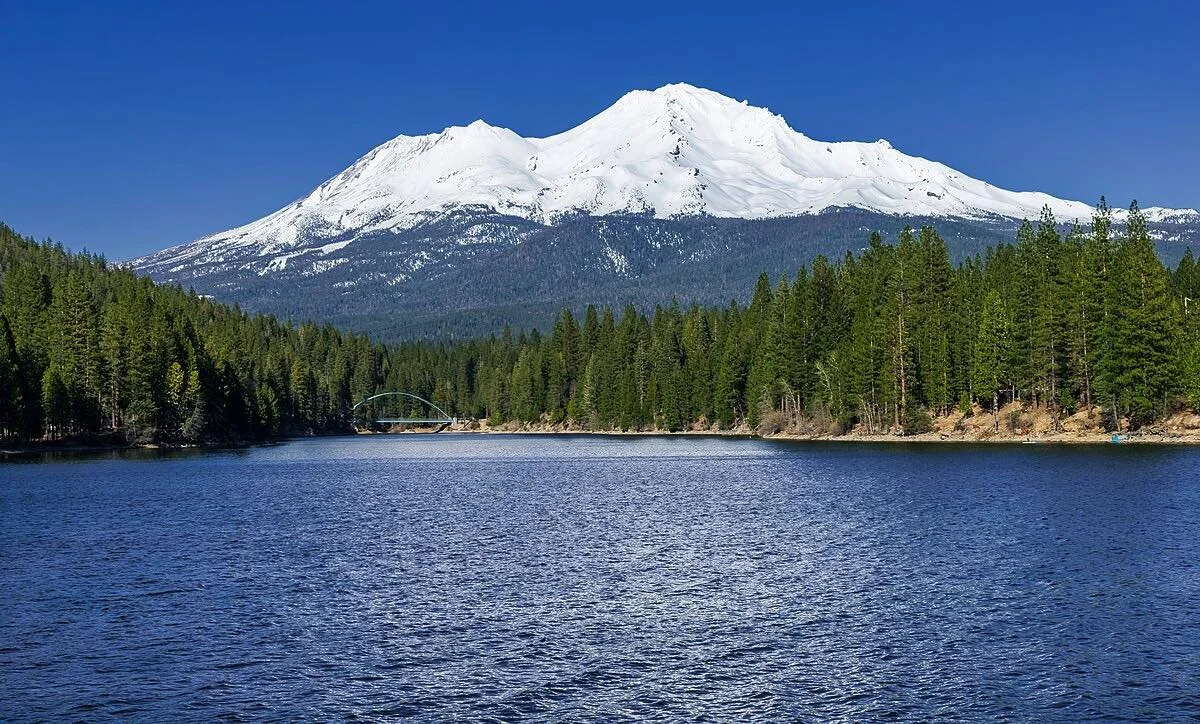
An Honest Economy for Siskiyou County
Where the Klamath runs free, the Karuk keep the fire, and the mountains remember everything
Siskiyou County is raw, rugged, and deeply rooted. The Karuk Nation has stewarded these forests and rivers since time immemorial. The Klamath River dams have come down — the largest dam removal in American history — but the work of restoring salmon runs, honoring tribal water rights, and rebuilding the river economy is far from finished. Ranchers face an insurance market in collapse and healthcare access gaps that no rural community should accept. And the Shasta Valley and Scott Valley agricultural economy needs federal support that actually reaches the county. These three bills are where the real work starts.
The River Is Coming Back. The Economy Should Too.
The Klamath dams are down — the biggest dam removal project in history. But salmon recovery doesn't happen automatically, and neither does economic recovery for the farming and ranching communities whose water security was part of the original deal and never fully delivered. Meanwhile, Siskiyou's homeowners and ranchers can't get affordable insurance in a county that burns, and the Shasta Valley's agricultural economy needs the same food infrastructure investment reaching every other CA-2 county. These three bills address the river, the insurance crisis, and the agricultural economy — not with promises, but with drafted federal legislation you can read yourself.
Klamath Basin Restoration & Tribal Justice Act
The dams are out — but the Karuk still need legally binding rights, not just goodwill
The Klamath River originates in Siskiyou County, and the dam removal played out almost entirely within Siskiyou's borders — making this the most geographically specific bill for this county in the entire platform. Taking down concrete doesn't automatically bring back the salmon runs the Karuk Nation depends on for cultural survival, food sovereignty, and their fishing economy. And for upper basin irrigation farmers in the Klamath Project, the water security guarantees promised as part of the original dam removal agreement were never fully delivered. This bill addresses both sides. It funds comprehensive salmon habitat restoration from headwaters to estuary — spawning bed rehabilitation, water temperature management, and fish passage improvements across every Klamath tributary in Siskiyou County. It establishes Karuk Tribe water rights recognition with legally binding protections — not advisory consultation, but enforceable co-management authority over the river and its fisheries. It provides commercial fishing recovery grants for tribal and non-tribal fishing families whose livelihoods depended on Klamath salmon runs that collapsed under the dams. It establishes accountability benchmarks for post-dam-removal salmon restoration — real measurable targets for fish return, not just project completion milestones. And it addresses the water-sharing framework that upper basin Klamath Project farmers were promised, balancing agricultural water security with the in-stream flows that salmon require to survive and reproduce.
Federal Wildfire Insurance Stabilization Act
The Klamath River fire, the Shasta fire complex, and more — and then the insurance company left too
Siskiyou County has experienced severe and repeated wildfire activity — from the Klamath River fire burning through the Klamath National Forest to fire complexes in the Cascade foothills around Weed and Mount Shasta City. The same insurance market collapse hitting Shasta and Mendocino is accelerating in Siskiyou: non-renewal notices arriving in Yreka, Etna, and Fort Jones because proprietary black-box risk models that no one can see or challenge have labeled entire zip codes as uninsurable. This bill rips the black box open. It replaces secret insurer models with an open-source National Wildfire Risk Model — built with real data, reviewed by real scientists, and available to every homeowner and elected official. It creates a national "Zone Zero" standard: a 5-foot noncombustible buffer around every structure that qualifies homeowners for mandatory, guaranteed premium discounts — not suggestions. It establishes Firewise Community Certification that rewards entire neighborhoods for collective fire safety, because wildfire doesn't stop at property lines. It funds low-income home hardening grants so fire safety isn't a luxury for those who can already afford the retrofit. And it recognizes Indigenous cultural burning as a sovereign right — the Karuk and other nations whose prescribed fire knowledge kept these forests healthy for thousands of years before federal suppression policies created the tinderbox conditions that burn today.
From Seashore to Stockyard — CA-2 Food Security and Economic Resilience Act
Shasta Valley ranchers and Scott Valley farmers deserve the same food infrastructure investment as every other CA-2 county
The Shasta Valley floor and Scott Valley support significant cattle ranching and hay farming — the agricultural backbone of Siskiyou County. The Karuk Tribe's food sovereignty depends on access to salmon that the river is only beginning to recover. And like every rural CA-2 county, Siskiyou's producers need distribution infrastructure that doesn't require driving to Redding or the Bay Area to reach a market. This comprehensive food security and agricultural resilience bill delivers on all of it. It funds food hubs with cold storage in each CA-2 county — giving Siskiyou ranchers and farmers a local distribution network for the first time. Enhanced reimbursement for school meals sourced locally creates a guaranteed, reliable market for Siskiyou producers that doesn't fluctuate with commodity prices. A 25% set-aside for tribal food sovereignty programs directly benefits the Karuk Tribe, whose traditional food systems — salmon, acorns, and elk — were systematically dismantled and are only now being restored alongside the river. The bill also protects multi-generational agricultural operations on federal lands through public hearing requirements before any federal decision displaces agricultural stewards — critical for Siskiyou ranchers whose grazing allotments in the Klamath National Forest underpin their operations. And priority funding for food deserts — communities more than 20 miles from a grocery store — reaches the isolated valleys and communities throughout Siskiyou that have been left out of the supply chain entirely.
Every Bill Meets These Standards
Not campaign promises — tested principles. Drafted legislation with constitutional analysis, fiscal scoring, and real accountability. Read them and decide.
Join the Show Your Work
Movement
No spam. No corporate money. Just real updates on Siskiyou County issues, Klamath salmon recovery, timber, tribal rights, the 38+ bills, and campaign news — straight from Gregory Burgess.
Your info stays private • No PAC money • No corporate donors • Unsubscribe anytime