
CampaignAdventures
A Listen and Learn Tour — not a stump speech. From the high desert of Modoc to the fog-laced shores of the Pacific, Gregory Burgess showed up to hear the forgotten north.
The Mission
A Listen and Learn Tour. Not a Stump Speech.
This is what a Show Your Work campaign looks like on the ground. Gregory Burgess drove thousands of miles through the wild, vast terrain of California's 2nd Congressional District not to deliver speeches — but to sit down, shut up, and listen. To ask: what do you need? What has Washington never understood about where you live?
From the volcanic plateaus of Modoc County to the ancient redwood corridors of Del Norte, every stop on this tour was built on the same principle: the people of CA-2 are the experts on CA-2. A representative's first job is to hear them.
The Listen and Learn Tour · Chapter by Chapter
The Road Unfolds
Alturas, California. Population 2,700. The county seat of the least-populated county in the state, perched on a volcanic plateau surrounded by ancient lava fields, pronghorn antelope, and ten thousand square miles of open sky. This was the first stop on a Listen and Learn Tour — not a campaign announcement, not a stump speech, but a genuine effort to understand what this district actually needs from its representative in Congress.
Hotel Niles served as headquarters — a historic lodge with a coffee shop that has hosted ranchers, hunters, and travelers for generations. Gregory walked the main street, sat with locals, and listened. What does Washington not understand about Modoc County? The answer filled pages of notes. He ate excellent Mexican food and kept listening.
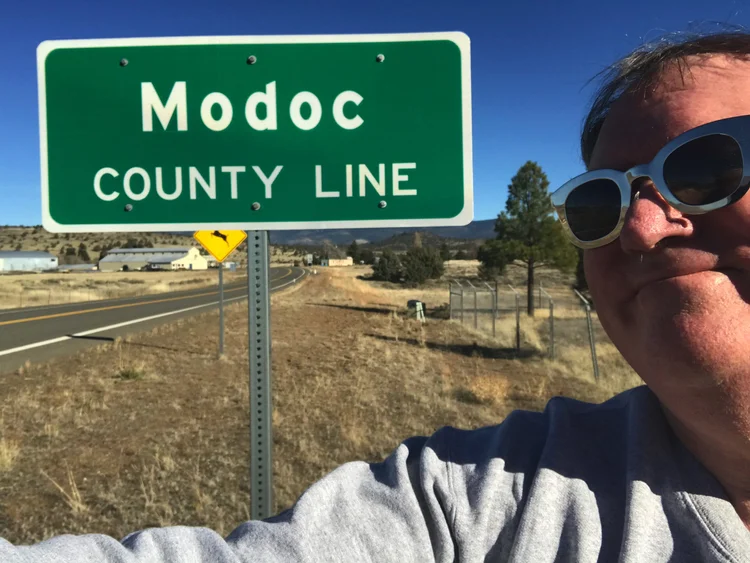
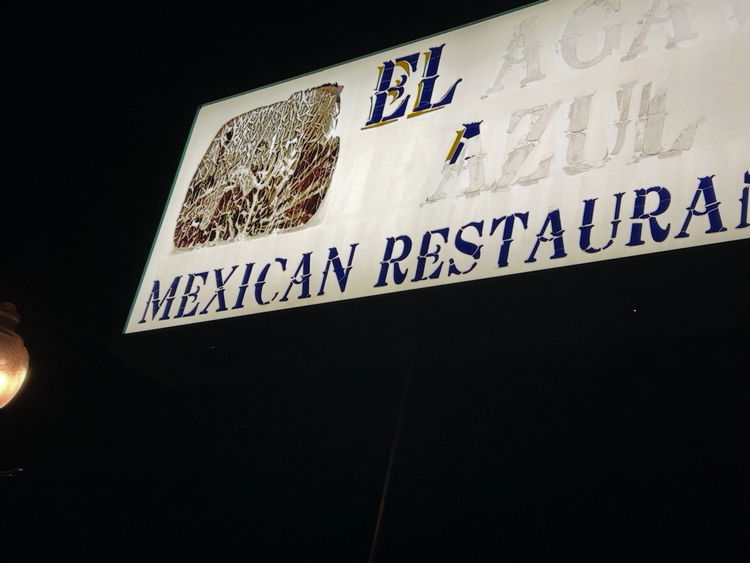
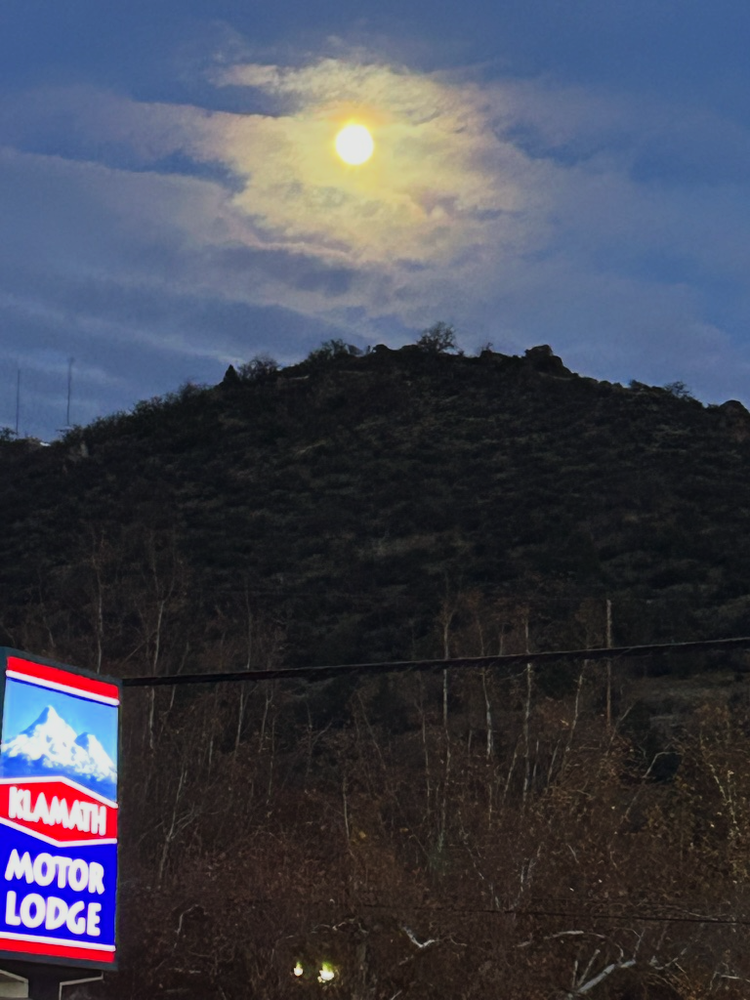
South on US-97, then west to Yreka — the historic gold-rush capital of Siskiyou County, where the Klamath River begins its long journey to the sea. Gregory checked into the Klamath Motor Lodge. The moon rose over the mountains. Notes spread across the table: What do the people of Siskiyou County need? What does the Klamath Basin need? What does Congress not understand about wildfire, water, and rural jobs in Northern California?
The next morning: Golden Rush Coffee. Hot cup in hand, listening notes reviewed. This is how a Listen and Learn Tour works — the knowledge you gather from communities becomes the foundation for legislation that actually reflects their lives.
Gregory Burgess was not a candidate on December 9, 2025. He would not become one until February 4, 2026. What he was on that December morning was a private citizen — a third-generation Marin County native with a Master's in Public Health, thirty years in behavioral health, and a deep concern for his home county — who appeared before the Marin County Board of Supervisors to present an idea: the Forest Slash–Livestock Manure–Compost framework, connecting wildfire thinning to agricultural soil health and rural jobs.
His Point Reyes National Seashore concerns were equally those of a private citizen, not a candidate. What troubled him — and continued to trouble him long before any campaign — was a fundamental failure of democratic process. The settlement that removed Point Reyes ranchers from the National Seashore had proceeded without Congressional Authority, without Appropriations, without Public Hearings, and under Non-Disclosure Agreements that silenced every party involved. The public had no way to know what had happened — or why.
Beyond the process: Marin County had lost a local food source. The ranches that had supplied locally raised, certified organic dairy and beef to the region were gone. For a county — and a nation — already facing a deepening food security crisis, this was not a minor administrative matter. It was a warning.
Point Reyes National Seashore — where naturalist Elizabeth Terwilliger once led field trips and where Greg's uncle G. Stuart Keith tracked birds through the coastal scrub — is a place of deep personal meaning. But what drove his advocacy was principle, not nostalgia: federal public lands belong to the public, and major changes to their management require public process.
Back north — this time as a declared candidate, and with the same commitment that had defined every stop before: come to listen, not to speak. Gregory Burgess drove to Mount Shasta City and met with Mayor Casey Glaubman. Then the residents spoke. Housing costs that have pushed families out of their own communities. Jobs that have left and never returned. Wildfire risk that grows every dry season while Congress does nothing. Gregory Burgess listened, and learned, and took notes.
The Siskiyou News headline the next day said it plainly: "Marin Candidate Drives to Mount Shasta, Hears Local Concerns on Housing, Jobs and Wildfire Policy." Hears. Not speaks. Not announces. Hears. That's what a Listen and Learn Tour looks like. Earned media — and a candidate who actually knew what Mount Shasta needed by the time he drove home.
The League of Women Voters CA-2 Congressional Candidate Forum in Redding. On camera, on record, on the issues — the Shasta forum was Greg's first opportunity to stand alongside the other candidates and present the Show Your Work platform to the full district on video.
Food security. Wildfire insurance. Rural healthcare. Pacific fisheries. Federal land stewardship. Every bill already drafted. Every cost already estimated. Every solution already published online. That's the Show Your Work difference.
Five hundred miles north of Marin, where the redwoods crowd the coast and the Oregon border is close enough to see on a clear day. Crescent City, Del Norte County — one of the most remote and underserved corners of the congressional district. A Listen and Learn Tour comes here because most campaigns never do.
At the Chamber of Commerce, Mr. Cruz and Chris welcomed Gregory warmly and spoke directly about what the county needs from Congress: roadway funding, tourism infrastructure, the economic connections to a broader district that too often forgets Del Norte exists. Gregory listened. At McDonald's, Troy delivered extraordinary customer service — a reminder that local pride and community spirit are alive and well in places that feel overlooked. Crystal, a fellow customer, helped find a phone charger at the local Walmart; her son got a Happy Meal. Lisa at CVS: another quiet act of northern California hospitality.
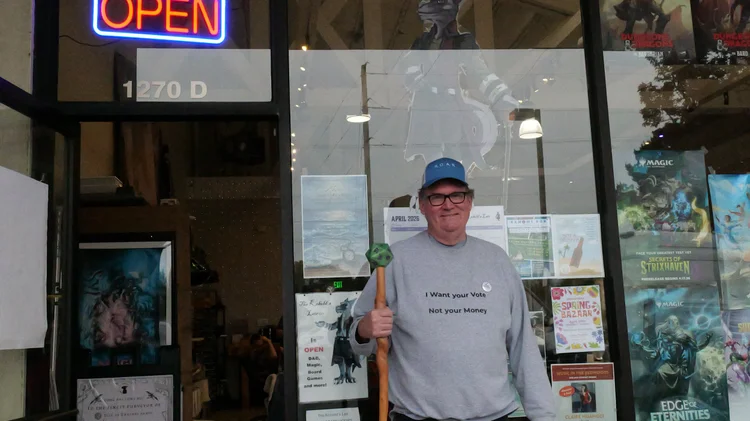
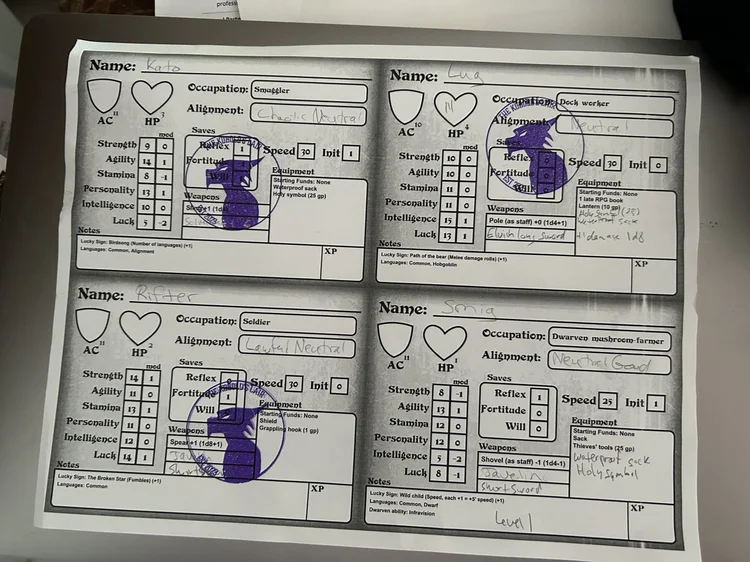
And then — Kobold's Lair. A candidate who has been playing Dungeons & Dragons since 1976 sat down with Jason, Ian, and Thomas for a dungeon crawl, Dungeon Mastered by Aisling Bludworth, and had a wonderful time doing it. This is what it looks like when a representative actually shows up in a community: you roll dice together, you share a table, and somewhere in between the encounters, you have a real conversation.
Kobold's Lair exists because of John Deglar — the owner and manager who built it into something far greater than a game shop. John is deeply embedded in the youth mental health ecosystem of Crescent City, actively involved in programs that support the young people of Del Norte County at one of the hardest moments in a generation for youth wellbeing. He operates media production — cameras, equipment, and the technical know-how — for local youth groups, giving young people tools to tell their own stories. And at Kobold's Lair itself, he has created a genuine gathering place: a space where locals can play games, build friendships, and experience the kind of face-to-face social connection that screens and algorithms have spent two decades eroding. John Deglar understands something that policy often misses — that healthy communities are not built top-down by legislation alone. They are built at the table, in the shop, in the after-school program, in the game. John is doing that work every day in one of California's most underserved counties, and doing it without waiting for Sacramento or Washington to show up.
Part of what drew Gregory to Crescent City in the first place — beyond the Listen and Learn mission — was Ian Crockett and the Harbor Game Convention. When Gregory learned that Ian had built a convention drawing 538 attendees in Del Norte County, it captured his attention immediately. Five hundred and thirty-eight people coming together to play games in Crescent City is not a small thing. It is a statement. Ian played alongside Gregory at Kobold's Lair and shared the story of how his vision for the Harbor Game Convention grew — not from a business plan, but from a desire to provide a positive outlet for his community. Ian had moved from Sacramento to Crescent City because he fell in love with the place: the coast, the redwoods, the people, the particular quietness of a small city that the rest of California has largely forgotten. The Harbor Game Convention is not a business venture. It is an act of love — love for a community, love for a craft, love for the idea that people are better together around a table than apart behind a screen. When Gregory said, "it feels so much better to chase the dream than to chase the money," Ian's head nodded immediately. No words were needed. The affirmation was total.
Aisling Bludworth is not only an amazing Dungeon Master — she is also a reporter, and she brought both skills to the table. Between encounters she asked Gregory difficult, penetrating questions about his campaign: policy, process, priorities, and what makes a Show Your Work candidacy different from the usual political theater. The questions were hard. They were fair. And they were exactly the kind of informed, serious engagement that every candidate should have to face — from a journalist who clearly did her homework, in a game shop in Crescent City, California, because that is where good journalism lives sometimes.
The real conversation happened with Jason and his son — a high school senior on the edge of graduation, looking at a world that has not invested much in Del Norte County or its young people. Jason turned to Gregory and asked him directly: look at the Oregon border towns — Brookings, Harbor, Ashland — and compare them to what Crescent City, Yreka, Mount Shasta City, and Alturas look like today. Gregory was being asked to account for the difference. What would these California towns be if Sacramento and Washington DC had not neglected them for decades? What could they still become?
Gregory answered honestly. The gap between those Oregon communities and the California towns just across the border is not an accident of geography or culture. It is the result of sustained policy neglect. Infrastructure not funded. Broadband not built. Economies not diversified. Young people not asked what they need — and then not given a reason to stay.
Gregory told Jason and his son directly: this campaign is working for the 13-to-30-year-olds. The people who will live longest with the decisions Congress makes today. And he made a request — one he hopes Jason's son carries back to school: Gregory would like to meet with the Senior class. Not to give a speech. To listen. To find out from the young people of Del Norte County what they actually want in a congressperson, and what they need from their government before they decide whether to stay or leave.
Heading south from Del Norte, Gregory moved through Humboldt County — logging country, fishing country, cannabis country, university country. The economy of Eureka is as complex as any in California, and the congressional district's largest city deserves a representative who has actually walked its streets and listened to what they need.
The first stop in Eureka was the local Safeway, where a young man was outside working hard to collect signatures on important community petitions. Gregory stopped, read each petition carefully, and signed them all. He thanked the young man for his dedication and for doing the unglamorous, essential work of the democratic process — standing outside a grocery store on behalf of something he believed in, asking strangers to engage with their civic lives. Gregory handed him a business card and wished him well. That kind of commitment to participatory democracy deserves to be recognized, not rushed past.
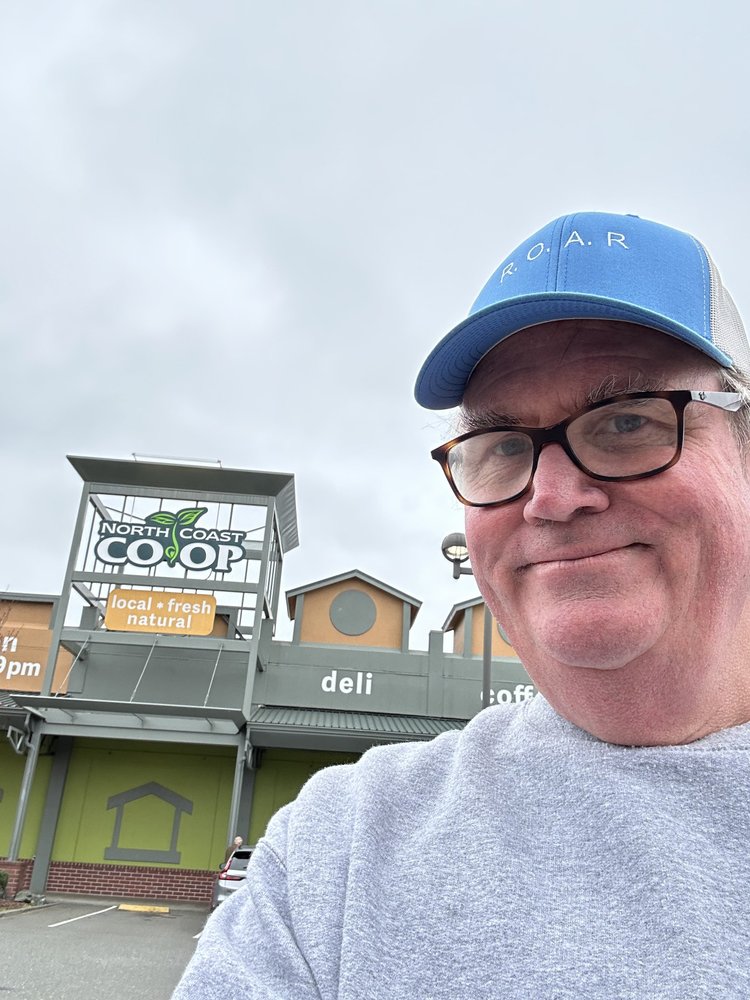
From Safeway, Gregory traveled to the Eureka Co-Op, where he set up his cigarette tray and banner on the sidewalk out front and spent time engaging with interested passers-by, handing out his business cards to anyone curious about the campaign. The Co-Op — a community-owned grocery and gathering place — is exactly the kind of institution that reflects what Eureka is: a city with deep roots, strong local identity, and a community that takes care of itself. It was the right place to stand and make the Show Your Work case.
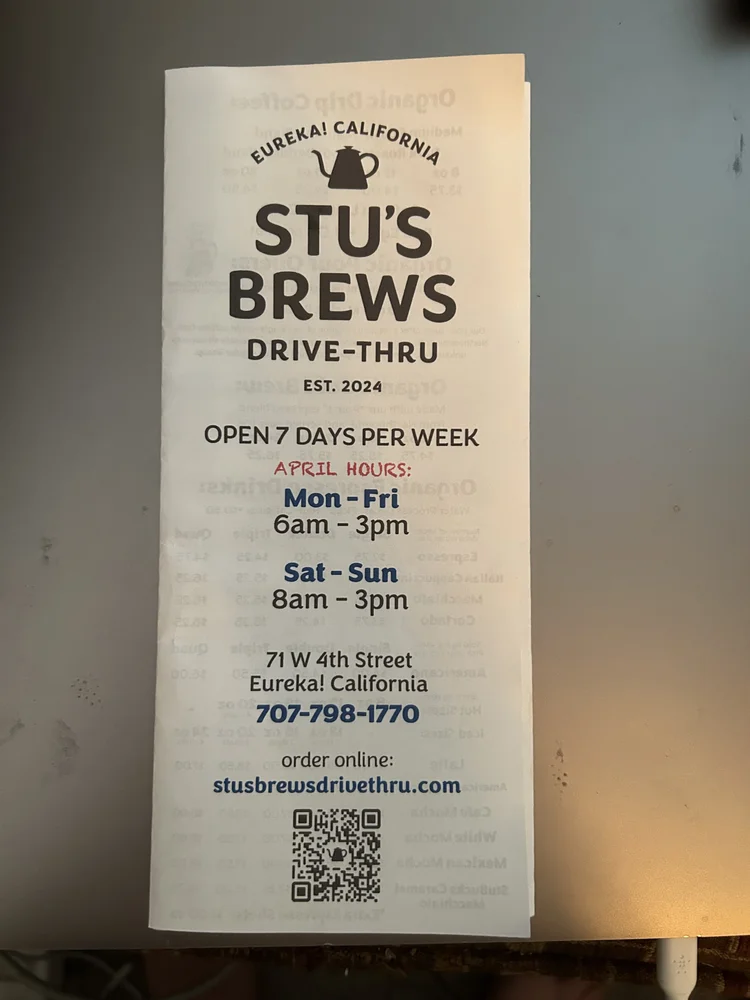
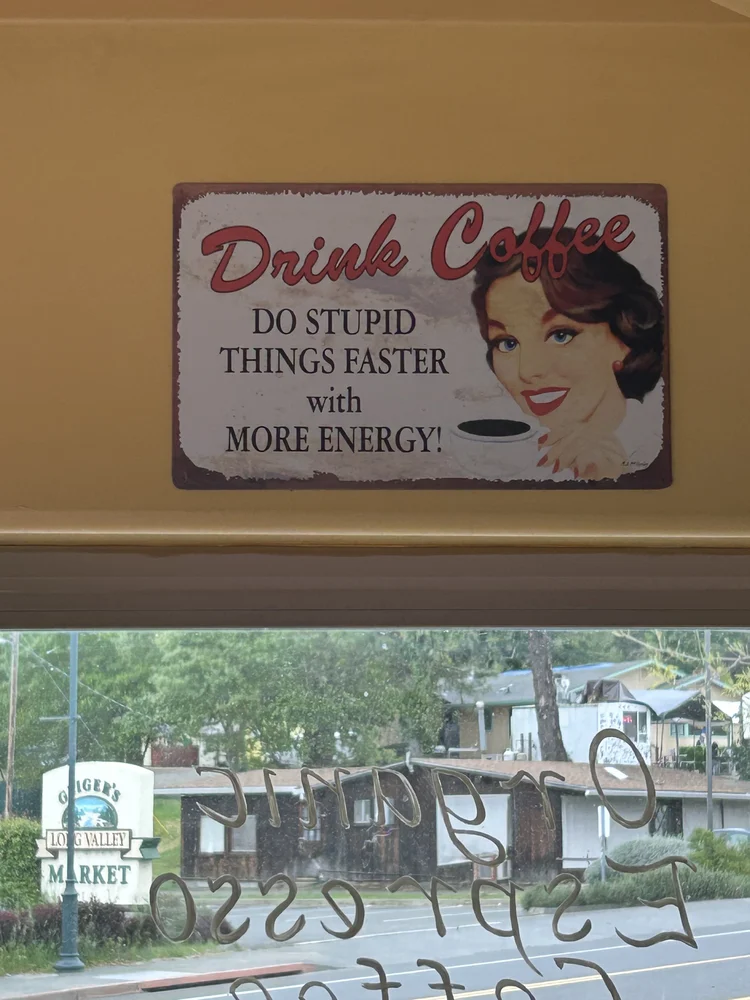
Stu's Brews followed. Alexie at the counter. The Hum Yum Caramel Latte. The smell of roasted coffee and the Pacific fog hanging over the bay. A stop on the road home — but not the last. Mendocino County was still ahead, and Pour Girls was waiting in Laytonville.

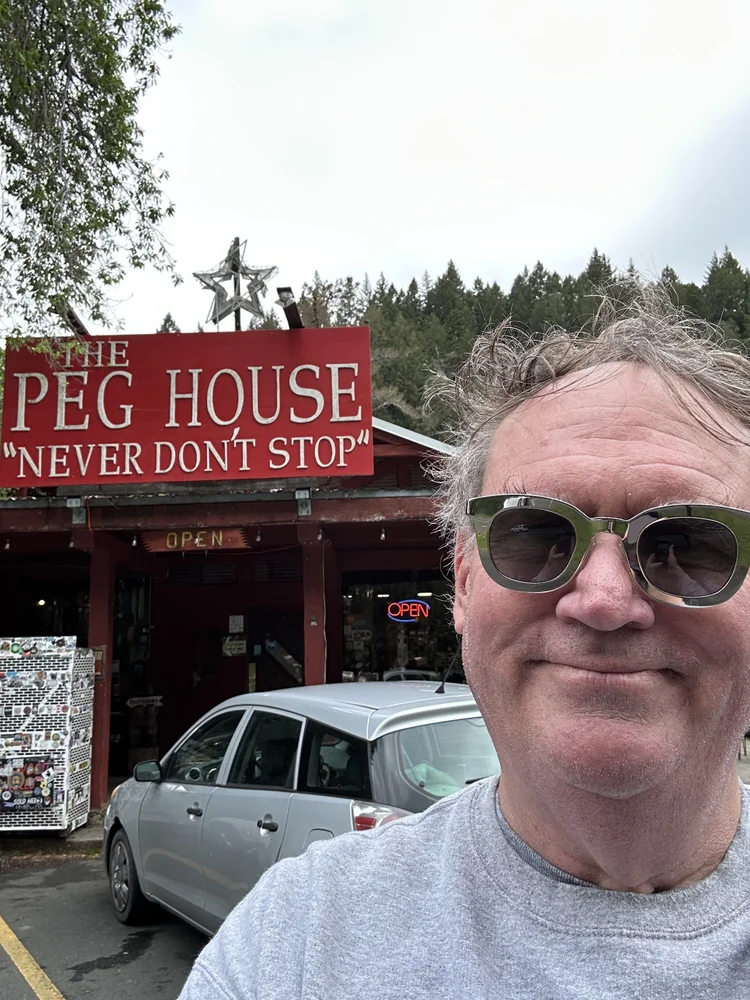
Heading south from Eureka on April 9th through the redwood coast, Gregory arrived in Mendocino County. At Peg's House in Mendocino, he sat with Peggy — an unforgettable host who poured locally made root beer and talked about childhood TV: Underdog, Sweet Polly Purebred, and her parents who insisted she wear 1920s clothing. Magic, as Gregory wrote in his journal, is real in Mendocino County. Sometimes it hides in the conversation you didn't plan to have.
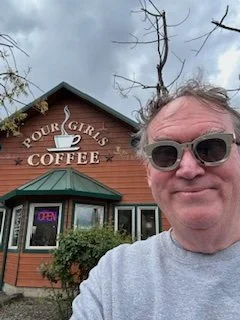
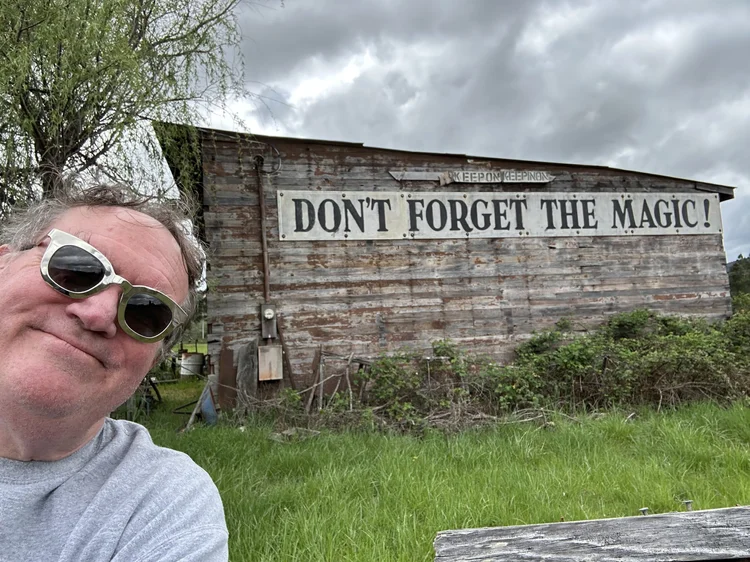
Continuing south through Laytonville — Pour Girls. Susie behind the counter, friendly and fast, exactly the kind of small-town entrepreneurial spirit that makes rural California work. Gregory had his cup, left a campaign card. The final coffee stop of the entire northern tour. The sign at the edge of town said everything: "Don't Forget the Magic." A Listen and Learn Tour doesn't forget. It carries what it heard all the way home.
The Route
Journey Through CA-2
The full arc of the Listen and Learn Tour — from Marin's coastline to Modoc's high desert, from the Klamath headwaters to the Oregon border. Not a stump speech circuit. A listening route.
Real Voices. Real Communities.
The People of CA-2
A campaign isn't just about policy — it's about the people you meet when you show up. Here are some of the unforgettable locals who made the northern tour real.
No PAC Money · No Donations · People Need Their Money for Food
A Listen and Learn Tour.
Now Read the Work.
The listening informed the legislation. Every bill — all 38 — reflects what Gregory Burgess heard in the communities of CA-2. Read them before you vote.