

Third-Generation Californian · Mill Valley · CA-2
R.O.A.R. — Restore Our American Republic
About Gregory
Burgess
Public Health Expert. Environmental Realist. Your Neighbor.
R.O.A.R. — Restore Our American Republic
I was born in San Francisco and raised in Mill Valley in the shadow of Mt. Tamalpais. Every value I carry into this campaign was planted there — by the land, by the community, and by my mother.
Some people leave behind a career. Some leave behind a family.
And some leave behind something rarer — an ethic.
Roots
The Place That Made Me
My family has been in California for three generations. I was born in San Francisco and grew up in Mill Valley, where the ridgelines drop toward the sea and Point Reyes was simply “the place we went on field trips.” As a child, I walked those beaches with naturalist Elizabeth Terwilliger — the beloved educator who introduced generations of Bay Area children to the living world. I learned to identify shorebirds at Drake’s Bay alongside my ornithologist uncle, G. Stuart Keith, the first birder in history to record more than 6,000 bird species worldwide — a man who during his Korean War service was known for getting into trouble with his British superior officers because the birds kept distracting him from his duties.
Uncle Stuart didn’t just teach me birds. During his visits with us in Marin, he would take me out to Point Reyes National Seashore and explain what the Pacific Flyway actually is — the great migratory superhighway where tens of millions of birds converge each year between Alaska and Patagonia. That childhood education turns out to be directly relevant to one of the most specific public health questions I am pressing in this campaign. When cattle were replaced at Point Reyes in 2025 under a new institutional arrangement with no publicly identified H5N1 biosurveillance protocol — one year after H5N1 emerged in U.S. dairy herds — I recognized the gap the moment I saw it. When you understand the Flyway, you understand why a dairy-cattle pathogen landing in a coastal wetland without public testing protocols is not an abstract risk. It is the kind of thing my uncle would have walked out to the headlands and counted.
That kind of education — learning to look carefully, name things precisely, and understand how systems hold together — turns out to be excellent preparation for public service. When I file a federal FOIA request, draft a bill, or file a court document, I am doing the same thing I learned as a child on those bluffs: paying close attention and writing down exactly what I see.
“I didn’t want to end up like the two old Muppets in the balcony — heckling Kermit’s show while doing nothing to help put it on. If the satirists were tapping out, someone had to actually do the work.”
— Gregory Burgess, on deciding to run for CongressMy Inspiration
Wanda Lee Ballentine — My Mother
Politics is often about the promises we make for the future. But character is defined by where we come from. My values — independence, foresight, and a refusal to waste — were not learned in a classroom. They were learned in a backyard garden in Mill Valley, tended by a woman who saw the future long before it arrived.
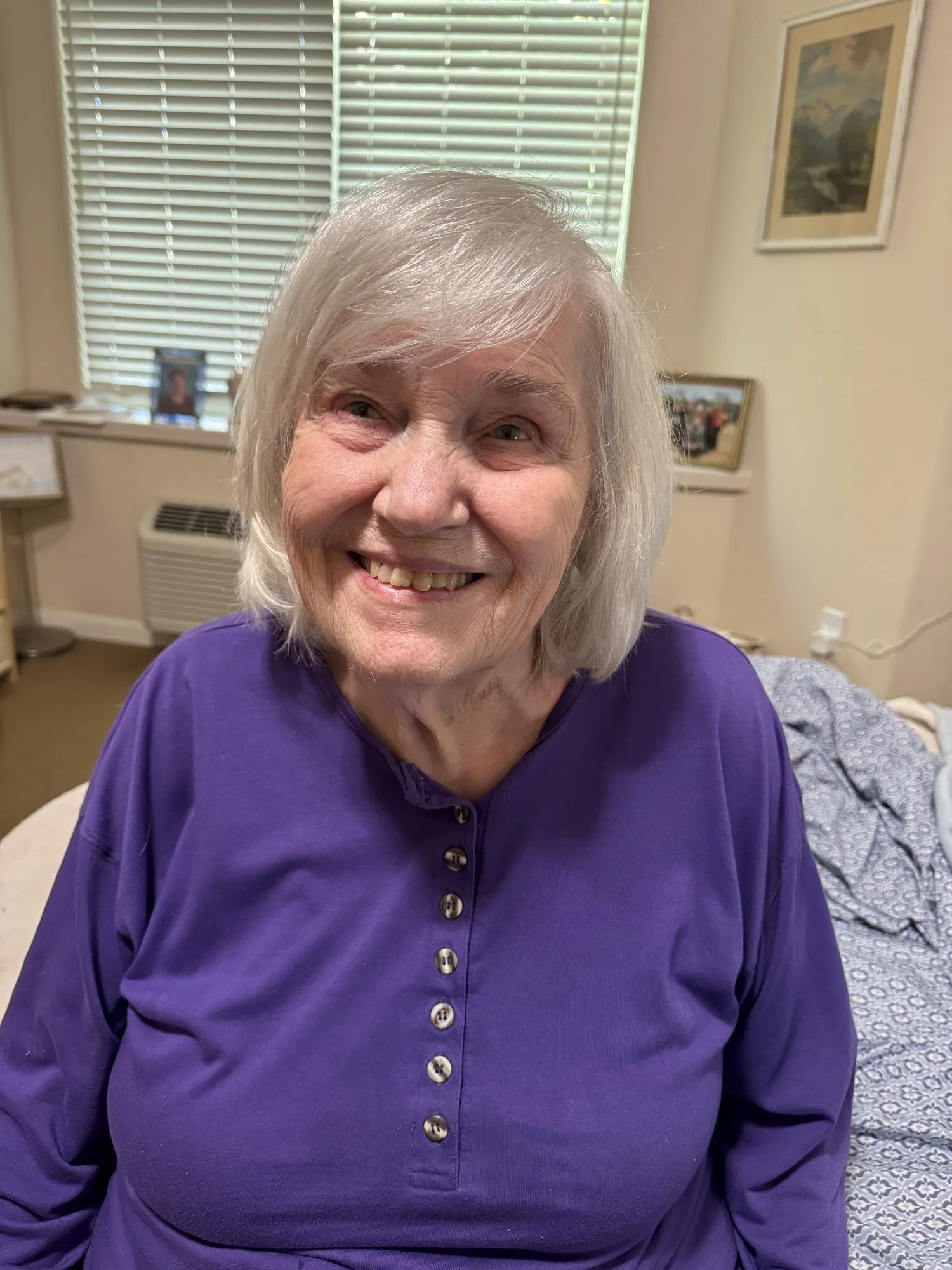
She raised us recycling and composting before it became a thing with three circular arrows. We had a can for metals, a can for glass, a can for aluminum, a can for paper, a can for compost, and a can for the dump. She did this because she grew up during WWII and believed that abandoning the Victory Garden and recycling campaigns wasn’t progress — it was amnesia. She was right.
🌿 Before Recycling Had a Symbol
Wanda Lee Ballentine was born in San Francisco and grew up on the Peninsula. She came of age as California was transforming from agricultural paradise to suburban sprawl, and something in her resisted that transformation from the very beginning. At UCLA in the late 1950s, she joined the Human Relations Council, dedicated to building understanding across racial and religious lines. She earned her Master’s in Social Work, and raised our family in Mill Valley from 1966 to 1985.
We grew vegetables in the backyard. We had chickens, until the neighborhood dogs killed them. We had rabbits. We ate fresh peas from the pod and strawberries from the fence. I hated weeding then. I understood it later.
📚 A Philosopher of Family and Land
In 1972, her chapter “Learning to Cooperate: A Middle-Class Experiment” was published in The Future of the Family, alongside Dr. Benjamin Spock and Gail Sheehy. She argued that the isolated suburban household — where every family owns its own lawnmower, washing machine, and car — was both psychologically destructive and ecologically wasteful. Her prescription wasn’t a government program. It was cooperation: share resources, pool childcare, grow food together, build community through the practical acts of daily life.
During California’s devastating 1977 drought, ABC7 News featured her demonstrating how to recycle laundry water for her garden. She wasn’t theorizing. She was living it.
✊ The Activist Years
She went on to fight the ozone crisis on early internet forums in 1992 — years before most Americans had email. In 1996, she opposed a semiconductor plant’s wastewater discharge near the Willamette River, which would have discharged millions of gallons of wastewater daily. She understood, decades before the mainstream, that “high-tech” industry could be just as destructive as smokestacks and strip mines. In 2003, she helped organize the Global Warming Crisis Council in Cleveland — before Al Gore’s documentary, before climate was front-page news — connecting over 6,000 activists worldwide.
“She taught her children that the planet is not a metaphor — it is a home. She taught that environmentalism is not a political identity but an obligation. And she taught that real values don’t require applause.”
— Gregory Burgess, on his motherNow 89 years old and living in memory care in Petaluma, she still organizes her fellow residents and invites them to church services. She represents what it means to be a citizen in the deepest sense: someone who never stopped believing that individual choices matter, and that the future is something we owe to one another.
She kept the garden growing. She kept the bins sorted. She kept fighting. She was right. She still is.
My Father
Earl “The Pearl” Burgess — Korean War Veteran
In loving memory of Earl “The Pearl” Burgess — January 19, 1931–April 18, 2026. He lived to see his son campaigning. This campaign continues in his honor.
When I drove to Redding for the League of Women Voters forum on April 2nd, I didn’t make that trip alone. My father came with me. He was 95 years old, a Korean War veteran, and he was in hospice. I was his primary caregiver. I drove him to his VA appointments, navigated his benefits, and made sure a man who served this country received the care he earned. He passed peacefully on April 18, 2026.
He wanted to see his son campaigning. He told me he wanted to live long enough to watch the November 2026 election. He did not make it that far, but he lived to see the campaign begin. I am not sharing this to ask for sympathy. I am sharing it because it is true — and because it shapes everything about why I am running and how I am running.
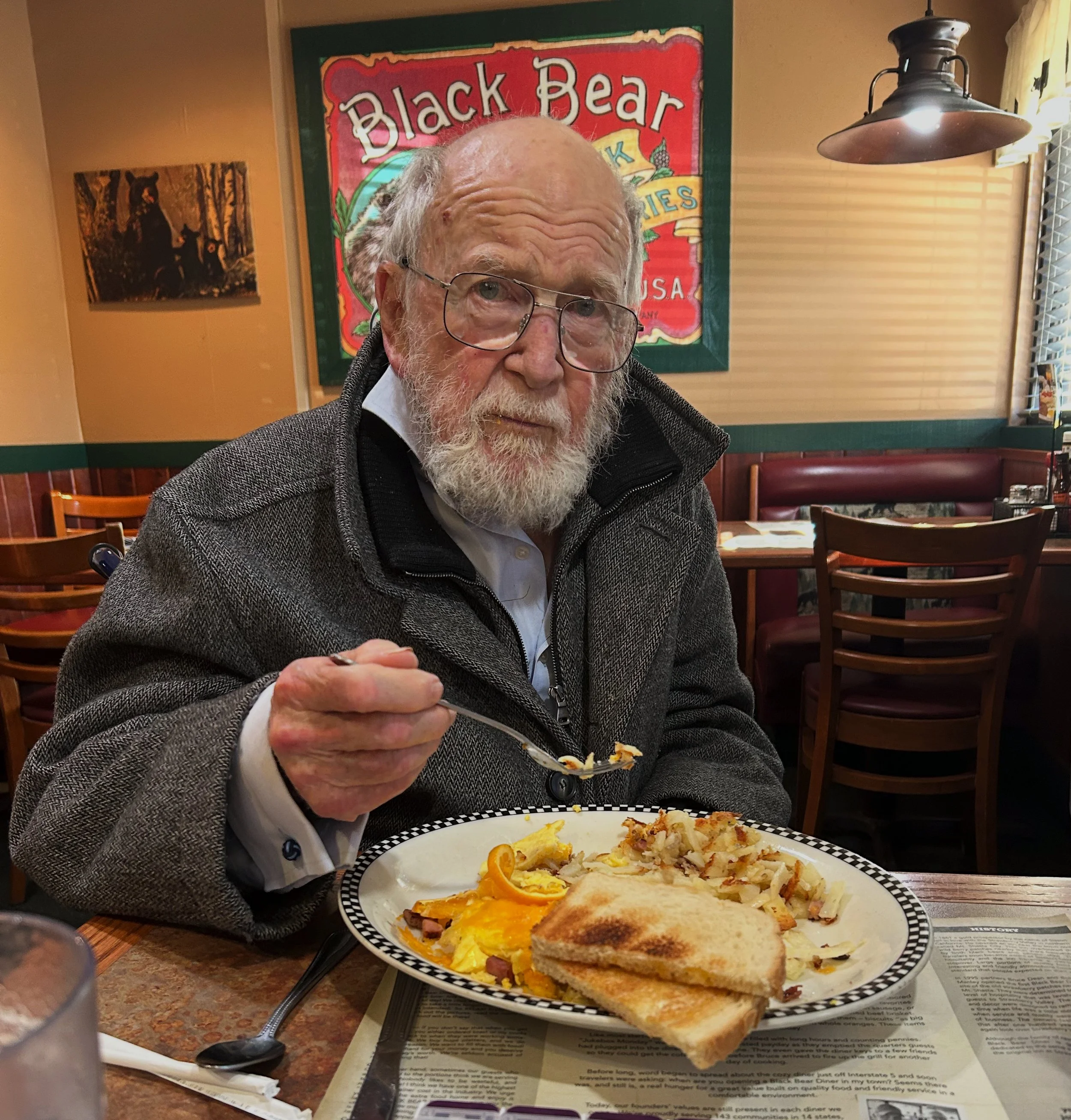
When your father is in hospice and you are his caregiver and you are simultaneously trying to campaign across nine counties on a shoestring budget with no PAC money and no donations accepted, you tend to be very clear about what you are doing and why. There is no room for pretense. There is only the work. My father passed peacefully at home on April 18, 2026, with family present. The work continues.
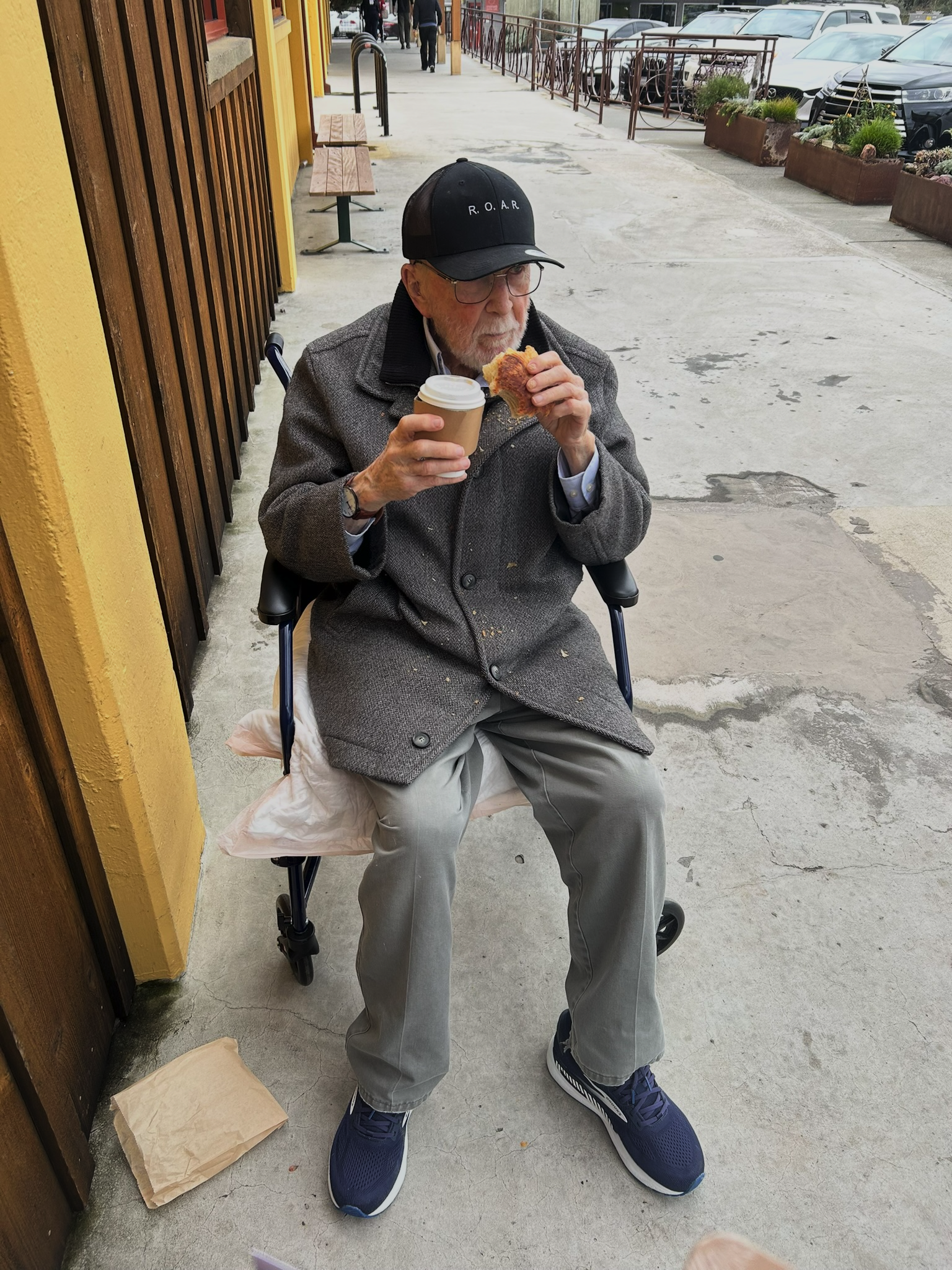
⚒️ Army Counter Intelligence
My father served as an Army Corporal in Counter Intelligence during the Korean War, shipped out from San Francisco. He has lived his entire adult life with one defining principle: understand the system well enough to navigate it honestly. That philosophy runs through everything he taught me.
“If you do not understand something, look for the financial interest.”
“I practice enlightened self-interest.”
— Earl Burgess, on how to read the world
⚓ Earl the Pearl and The Capricorn
After the war, my father moved to California and built a life around the sea. He had a boat in his life from the day he arrived in San Francisco — including, as a psychiatric intern in Los Angeles, a Chinese Junk he lived aboard that sank once in the dock. (His insurance did not cover it. He refused to pay for boat insurance ever since.)
In the 1990s, he sailed his boat The Capricorn from San Francisco to Croatia over a four-year journey — earning the name “Earl the Pearl” from his crew. Before GPS, he once navigated the coastline from San Luis Obispo to Morro Bay entirely by fathometer through dense fog, running aground just outside the channel as the buoy lights came up. The harbor agent who finally freed them received a bottle of champagne left over from the Nixon inauguration.
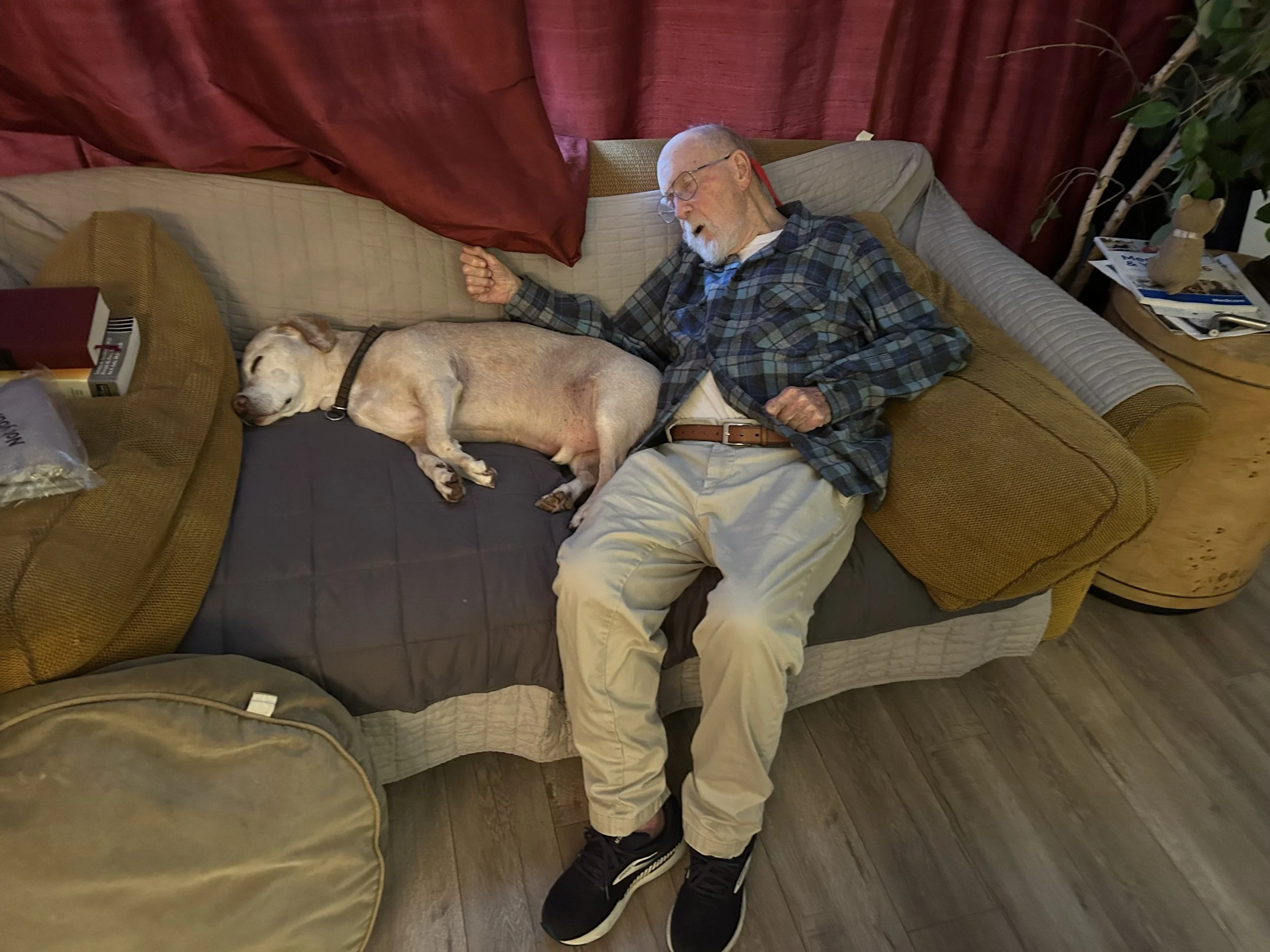
🏠 The Redding Connection
My connection to Redding runs deeper than that April drive. I grew up spending Christmases and Thanksgivings there, visiting my aunt and uncle. My Aunt Sally taught creative writing at the community college and special education in the K–12 system in Red Bluff — and she used Dungeons & Dragons in her classrooms to inspire her students to write, something she picked up watching her nephew play the game. She was my direct inspiration for becoming a Special Education teacher myself.
My uncle was G. Stuart Keith, who wrote his landmark reference work on the birds of Africa while living in Redding. Both of them shaped who I am. None of this is backdrop. It is biography.
“I understand the VA system from the ground up, not from the top down. That is the only way to understand it.”
— Gregory BurgessI am not a coastal candidate who showed up when the district lines changed. I am not running on a resume. I am running because my father drove three hours to watch his son campaign — and because every family navigating hospice, the VA system, or caregiving deserves a representative who has lived it, not just legislated it. This campaign continues in his memory.
Education
The Foundation
Master of Public Health
University of Minnesota Twin Cities — Concentrations in Environmental Health, Food Security, and Climate Change
Bachelor of Arts — Religious History
University of California Santa Cruz — Sustained study of world religious traditions, texts, and cross-cultural ethics
A Life in the World
Learning From the Inside Out
I have read the Torah, the New Testament, the Quran, the Bhagavad-Gita, and the Mahabharata — not as academic exercises but as sustained attempts to understand the world on its own terms. Approximately half of my closest friends and family are Jewish, and my concern for human dignity — Palestinian, Israeli, Sudanese, Ukrainian — is personal, consistent, and universal. If our standard is not universal, it is not a moral standard. It is a tribal one.
For a year I lived with a Muslim family in Indonesia, the world’s most populous Muslim nation. I participated in Ramadan, attended Friday prayers, and learned what it means for a faith to order the rhythms of daily life. Upon arriving at Soekarno-Hatta International Airport to meet my mother, who had traveled to visit me, I could not find her in the chaos of the arrivals hall. A Muslim gentleman — a stranger who owed me nothing — found my mother, ensured her safety through the night, and personally brought her to me the following morning. He asked for nothing in return.
In that act of extraordinary care, I recognized the living tradition of the Prophet Muhammad’s relationship with Khadija bint Khuwaylid, his first wife, whose strength, dignity, and independence set the standard of Muslim womanhood — and whose relationship with the Prophet established the precedent for how Muslim men treat the women in their lives. I did not learn that tradition from a text. I learned it from the way people actually lived.
“By living with a Muslim family for a year, I learned that great human tradition not from a text, but from the way people actually lived it every single day.”
— Gregory BurgessProfessional Life
A Career That Crosses Every Line
I am not a politician. I am a public servant with thirty years of experience. I have been a counselor, a teacher, a federal officer, an engineer, a bus driver, and a mail carrier. Each of those jobs taught me something that a career spent only in politics never could.
Behavioral Health Counselor
Three decades working directly with people navigating mental health challenges, substance use, and complex social circumstances. Suffering is not abstract. I have sat across from it for thirty years. This work taught me more about how policy actually lands in people’s lives than any briefing paper ever could.
Special Education Teacher
Worked with students with autism spectrum disorder and learning disabilities across Hawaii and Marin County schools. Developed individualized approaches to help every student reach their potential. I studied Skinnerian behaviorism as part of my credential training and have spent years thinking about neural plasticity — what happens when you teach a child whose brain processes the world differently than the textbook assumes. Every child, regardless of their challenges, can succeed — and that philosophy drives everything I do in policy.
Quarantine Public Health Officer
Conducted epidemiological investigations on disease outbreaks and travel-related exposure risks. Enforced federal quarantine regulations and led interagency coordination for public health preparedness. When I say I understand systems failure, I mean it from direct experience.
Clinical Engineer
Led regulatory transitions and developed AI-driven blood loss analysis models for improved surgical device accuracy. Authored SOPs and regulatory documentation for laboratory compliance. This is where I first trained artificial intelligence to detect blood loss in surgery — giving surgeons real-time data that saves lives.
Teamster (School Bus Driver) & U.S. Postal Carrier
I have worked the jobs that keep this economy running. I have driven children to school and delivered your mail. I was also a Teachers’ Union Grievance Representative. When I talk about what workers need from their representative in Congress, it is not from a stump speech — it is from personal experience in the union hall and on the route.
Community Volunteer
I volunteer as a driver for A Simple Gesture, collecting food for the Marin Food Bank. I support the World Food Program USA Zero Hunger initiative — which stepped forward when the federal government withdrew support from global food security programs — because food security is not charity. It is foreign policy.
Federal Accountability Advocate
Filed a 25-category FOIA request (DOI-2026-003984) and a formal DOI Inspector General complaint challenging the January 2025 Point Reyes NPS settlement. Drafted the Right of Return Act — federal legislation requiring public hearings before any federal land decision displacing agricultural stewards. Mailed letters to nearly 1,000 West Marin residents. Service to community does not wait for a title or an election.
Environmental Realism
My mother didn’t just talk about environmental values — she lived them in our backyard, decades before they were fashionable. I call my approach Environmental Realism: regenerative stewardship that honors working landscapes, sustains rural livelihoods, and rejects policies that sacrifice human communities for ideology. Our forests, ranches, and coastlines thrive when the people who tend them thrive. I am running for Congress on the same principle my mother lived: don’t just promise. Show your work.
The Campaign
Why I’m Running
I decided to run for Congress long before I filed. The moment stayed with me — watching Jon Stewart and Stephen Colbert stand at the National Mall and tell their audience, in so many words, “this is as far as we can take you.” Two of the sharpest political voices of their generation had reached the edge of what satire can do. I didn’t want to sit in the balcony with Statler and Waldorf, heckling while the show went on. If the satirists were tapping out, someone had to actually do the work.
So I started by drafting it. During COVID, I wrote 38 complete federal bills in full congressional format — with constitutional authority statements, spending caps, and sunset provisions. Not talking points. Bills. That was before any campaign.
In November 2025, I began researching how to run for the 2026 midterms. One policy idea I was actively developing was a forest slash–livestock manure–biogas–composting framework — one program that could cut wildfire fuel, replace fossil-fuel fertilizer, and create 100,000 rural jobs across forested western states. On December 9, 2025, I presented that framework to the Marin County Board of Supervisors as a private citizen. Two days later I drove out to Point Reyes to find out whether the idea was actually workable in the field. The ranchers were gone.
Families displaced, barns emptying, 150 years of agricultural knowledge packed up and removed — through NDAs, without a public hearing, and without the NEPA review the law requires. A private organization had received effective management authority over approximately 17,000 acres of public land the American public paid approximately $600 million for in 1962. I started pressing this issue as a private citizen, not as a candidate, and my concern was the process, not the outcome. I would honor any decision Congress made after a fair public NEPA process. What I could not honor was a decision of that magnitude made in secret. Eight days after that trip, I gathered my first nomination signature. The advocacy and the candidacy had begun separately. They converged.
My mother’s ethic of refusing to look away when something is wrong lives in me. So I acted: a 25-category FOIA request, a formal DOI Inspector General complaint, the Right of Return Act, and letters to nearly 1,000 West Marin residents. Not after winning — before asking for a single vote.
Point Reyes is one issue among many. In March 2026, I published the Agricultural Resilience Imperative, a nonpartisan congressional policy brief documenting the national food security crisis. I sent it to 530 news outlets and 89 congressional policy aides two days before the story hit the national news cycle. Fourteen legislative recommendations, fiscally grounded. Whatever Washington was going to call an emergency, I had already drafted the response.
The 38 bills cover every problem CA-2 faces: wildfire insurance, housing justice, rural healthcare, federal lands accountability, workers’ rights, fisheries, tribal co-management, tax fairness, and foreign policy. Every bill has a constitutional authority statement, a spending cap, and a plan to pay for it. That’s what “Show Your Work” actually means.
Democrat, Republican, Independent: this district belongs to all of us. I am not asking for your money. I am asking for your vote — and your attention. This campaign runs on candidate statements, community festivals, letters to the editor, and op-eds. If I am not elected, I will present every bill to whoever wins CA-2, in the hope they will carry the work forward. The legislation is what matters. The election is only one path to getting it done.
Read my bills at gregoryburgessforcongress.com. I humbly ask for your vote.
The Victory Gardens of World War II proved that Americans could live differently when we understood it mattered. My mother never accepted that we should go back to wasteful isolation just because the war was over.
— Gregory BurgessShe kept the garden growing. She kept the bins sorted. She kept fighting.
She was right. She still is. And so can we.R.O.A.R. — Restore Our American Republic
No Party Preference. No Special Interests. Just Honest Work for CA-2.
38 drafted bills. Every word public. Running on candidate statements, community festivals, and earned media. Read them before you vote.
Read The Bills Get Involved
Join the Show Your Work
Movement
No spam. No corporate money. Just real updates on the 38+ bills, food security alerts, Point Reyes accountability, county events, and what this campaign does next — straight from Gregory Burgess.
Your info stays private · No PAC money · No corporate donors · Unsubscribe anytime